The Feedstock Problem
Most waste-to-value projects fail on feedstock, not technology. Why our Oklahoma project starts with a hauling company instead of a reactor.
By Matt Chandler · Building InfiniteEco
Published September 8, 2026
Most of these projects die on feedstock
When a waste-to-value project fails, the story you hear is about the technology. The reactor underperformed. The vendor overpromised. The yields never matched the pilot.
I ran a pyrolysis technology company. I can tell you the technology is usually the part that worked.
What kills these projects is feedstock. Someone builds a conversion system and then goes looking for material to feed it. They find the material is more scattered than the spreadsheet assumed, more contaminated than the sample suggested, and more expensive to gather than anyone budgeted. The plant runs at half capacity. The economics were written for full capacity.
That is the ordinary way these things fail. It is why I now start from the other end.
What biochar actually is
Biochar is what is left when you heat wood or other organic material to a high temperature with almost no oxygen present. The process is called pyrolysis. Without oxygen the material cannot burn, so instead of releasing its carbon as smoke and ash it breaks down into a stable, porous, carbon-rich solid.
Two properties make that solid worth something.
The first is structure. Biochar is riddled with microscopic pores, which gives a small amount of material an enormous internal surface area. In soil that structure holds water and nutrients and gives microbes somewhere to live. In a filter the same structure catches contaminants.
The second is stability. The carbon in biochar resists breaking down for a very long time. Wood left to rot or burn returns its carbon to the atmosphere within a few years. Wood converted to biochar and put in the ground keeps most of that carbon locked up for centuries. That is why biochar makes up a large share of the carbon removal credits issued worldwide today, and why, according to public purchase disclosures, buyers like Microsoft, Google and Stripe have been purchasing them at scale.
So one material, several markets. Agriculture and soil health. Nursery and landscape. Water and stormwater filtration. Contaminant remediation. Concrete and asphalt, where the evidence is younger but moving. And carbon removal, which sits alongside any of the others rather than replacing them.
The hard part is not making it
Pyrolysis is not a new idea and the equipment exists. The hard part is standing in front of a reactor with a reliable, affordable, clean stream of wood going into it, every week, for years.
That is a logistics problem wearing a technology costume.
Wood waste is not scarce in most metropolitan areas. It is badly organized. It sits on hundreds of job sites in small quantities, mixed with material you do not want, and gathering it means trucks, drivers, containers, routes, relationships with the people generating it, and somewhere to put it. Build all of that from scratch to serve a conversion plant and the feedstock cost eats the project before the first ton is produced.
I have watched this happen. It is not a failure of ambition. It is arithmetic.
Starting from the other end
Our Oklahoma project starts with the trucks.
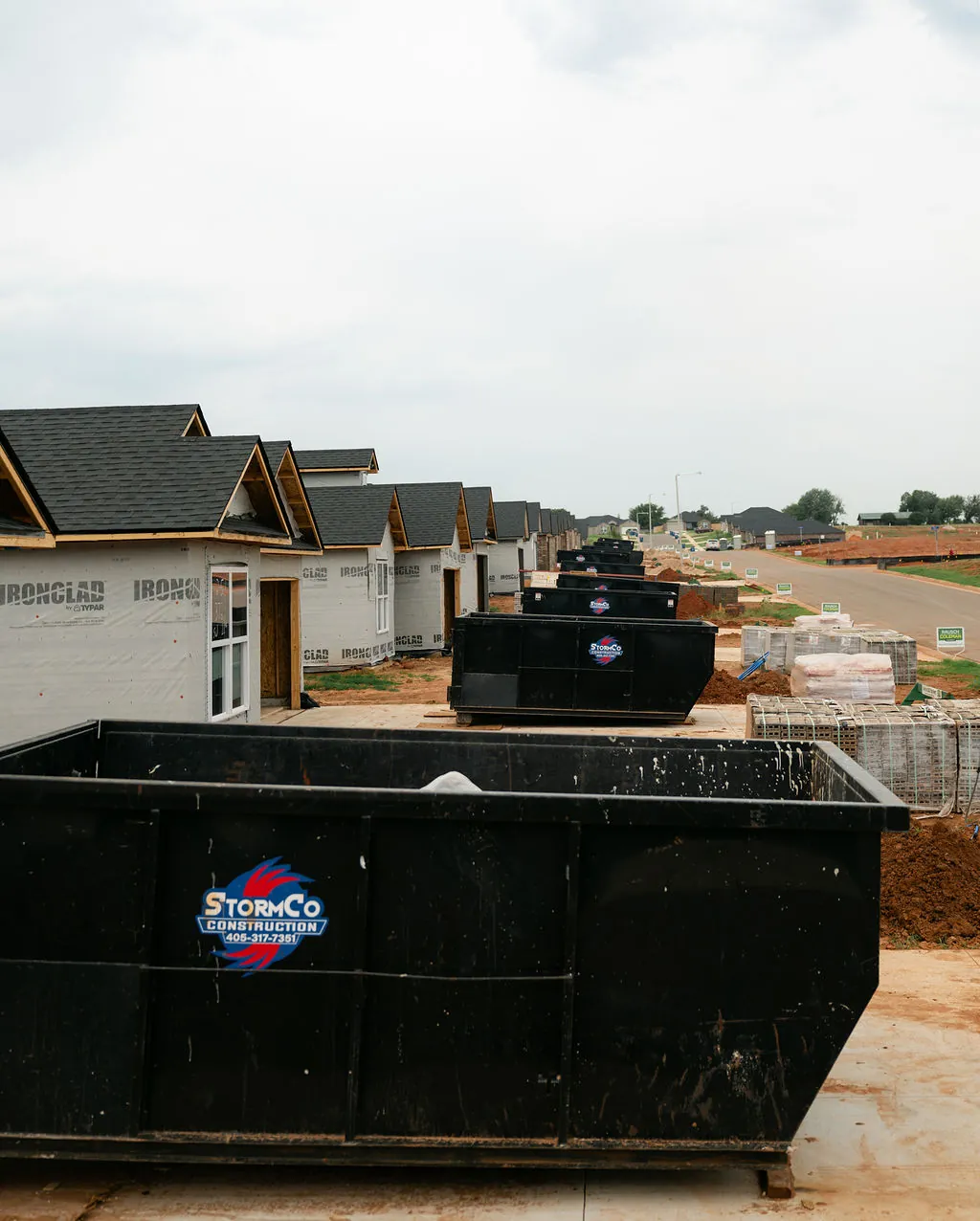
I founded StormCo, which collects construction and woody waste from residential builders across the Oklahoma City area. It has been doing that for over a decade. Builders pay for the service, because getting debris off an active job site is not optional for them. The routes exist. The containers exist. The relationships with the builders exist. We have tripled the dumpster count over the past year.
Today most of that material goes to a landfill, and StormCo pays a tipping fee for the privilege.
Change the destination and two things happen at once. The disposal cost goes away, which improves the economics of the collection business on its own terms. And a conversion facility gets a feedstock stream that is already aggregated, already paid for by someone else, and already arriving on a truck that was going to make the trip regardless.
That is the whole idea. The feedstock is not a cost to be solved. It is a service someone is already being paid to perform.
I did not plan it in this order. I owned a hauling company and I had run a pyrolysis company, and it took me longer than it should have to see that the first one solved the hardest problem of the second.
Where the discipline goes
There is a real constraint here and it deserves to be said plainly, because leaving it out is how you get a model nobody can build.
Not all construction wood is suitable. Research on urban and construction wood waste has found problematic concentrations of metals in specific fractions: mercury in painted wood, arsenic in chemically treated lumber. Clean, untreated dimensional lumber and pallet stock convert well. Painted and preservative-treated material does not belong in a reactor producing something destined for soil.
So sorting is not an afterthought bolted on later. It is a design requirement, and it has to live at the point of collection where the crews and the containers already are, not at the end of the line where it is expensive.
Any model that treats every pound of construction wood as feedstock is a model that has not been to a job site.
The pieces have to arrive together
A project works when feedstock, technology, end markets, capital and local partners align. Any one of them missing and the others do not matter.
For the Oklahoma project the feedstock is an operating business rather than a projection. The technology partner is identified. The markets are the ones nearest to hand: agriculture and soil health, nursery and landscape, industrial applications, and carbon removal where the accounting genuinely supports it. Public programs matter too. USDA's conservation programs now include a national practice standard for soil carbon amendment that covers biochar application, with cost share available to producers who use it, which changes what a farm can afford to pay.
The current focus is validating product requirements and customer demand before infrastructure or capital is committed.
None of this is clever. It is the ordinary work of getting five things to line up in one place at one time, which is most of what project development actually is.
If you have a waste stream, a site, a technology, an end market, or a project that is missing some of its pieces, tell me what you are working on.